Free to our community, for the love of the game

Learn the physics behind the Messi free kick.Give it three weeks.

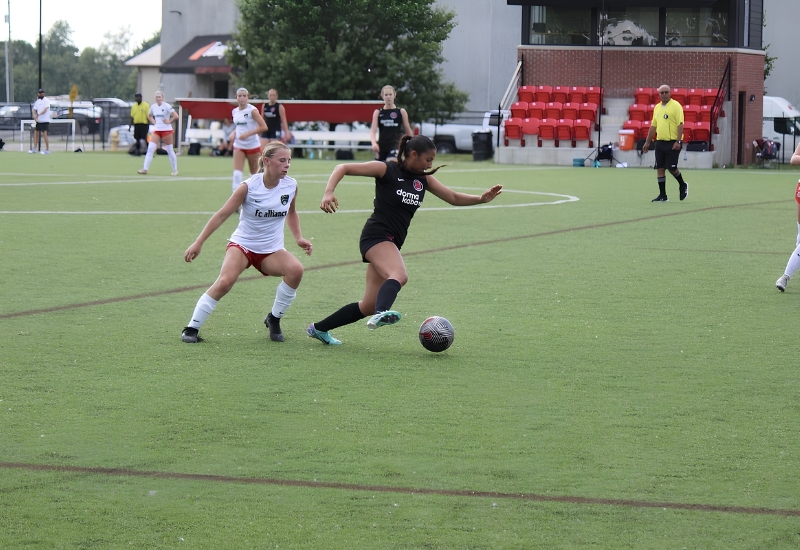
I'm Anaya, a former ECNL player with FC Pride 09. For the past three years i've been researching, studying and teaching the Messi free kick. From spin axis, to contact point, trajectory, and failure modes. This is my free eight-part method I wish someone had handed me three years ago.
BALL THE WALL TARGET
3+ yrs
Research, study and learning
8 part
Researched method approach
Junior
CARMEL HIGH SCHOOL
Free
COMMUNITY COURSE
Introducing Anaya

I fell for this game long before I was any good at it.

"The best part isn't scoring one myself any more. It's standing there when someone else's first one goes in."
I'm a junior at Carmel High School and I've been playing since I was small.

I started out at Indy Eleven, and a lot of what I know about the game came from there.

Most of my club years were with FC Pride, two of them in the ECNL, and I've been moved around nearly every position on the pitch before settling in as a number 10. Every one of those shirts taught me something.

What I love about soccer is the same thing I loved at eight years old. It gives you a problem, right now, in front of everyone, and asks you to solve it. Some days you do and some days you really don't, and you come back the next morning anyway.

The free kick was the one that took me the longest. I watched it a hundred times and still put it into the wall. What changed things was people giving me their time: coaches who stayed behind, teammates who stood in a wall for me in the cold. This site is my way of passing that on.
Anaya Mistry
The process MY RESEARCH TOOK

The phases that formed over the last 3 years of learning the physics.

Repetition on its own was not enough, and the work only moved forward once I stopped copying the technique and started studying the mechanics behind it. This is the process in the order it happened.
Phase one

Observation and repetition

The early phase was spent watching the kick being taken at the highest level, slowed down and repeated, looking at what the body was doing rather than where the ball finished. I then practised it in volume. Thousands of strikes over several months, the majority of them unsuccessful, but enough repetition to build the technique the later phases would rely on.
Phase two

Research and analysis

Repetition stopped producing improvement, so I moved to the physics underneath it. I worked through the aerodynamics of a spinning ball: the Magnus effect, the boundary layer, pressure differential and spin axis. Understanding why the ball behaved the way it did turned an imitation into something I could reason about and adjust deliberately rather than by feel.
Phase three

Testing and findings

With the theory in place I isolated one variable at a time: contact point, run-up count, plant position, ankle lock. Side spin on its own produced bend but no dip. Topspin on its own produced dip but no bend. The reliable result came from a tilted spin axis combined with a fixed run-up, which is what makes the flight path repeatable rather than occasional.
Phase four

Teaching the method

The final phase was structuring it so that someone else could follow it. I have since spent a considerable amount of time teaching this in person, to teammates and to groups I have presented to, and every session has changed how the material is sequenced. What is written here is the result of that teaching, not a theory I have never tested on anyone.
WHY I MADE THE COURSE?

Learning the Messi free kicks helps me give others

01

Joy and Satisfaction

The moment the ball finally bends the way you meant it to is the best feeling this sport gives you. It costs nothing to hand that to someone else.
02

Player Irreplaceability

A coach cannot take off a player who can strike a dead ball. It's one of the few skills you can build entirely on your own time, and a teammate shouldn't have to pay anyone to learn it.
03

The Best Way To Score

One set piece changes a scoreline faster than anything else on the pitch. Every side around here should have someone who can take one.
Where it works

What physics of the kick has taught me

Same run-up, same visualisation, same contact. Only the situation changes. That's why it's worth the three years.
THE WALL TARGET

Direct free kick

The ball curves around the wall and dips. The situation this was built for.
CORNER TARGET

Corner kick

Identical spin and contact make the delivery curve in and become far harder to read.
DEFENDER CUT INSIDE TARGET

Dynamic shot

A sharp cut inside, then the same contact, gets you around the ball when the angle is difficult.
STRUCK FROM DEEP TARGET

Long delivery

Using spin to place the ball in those hard to reach key positions from anywhere.
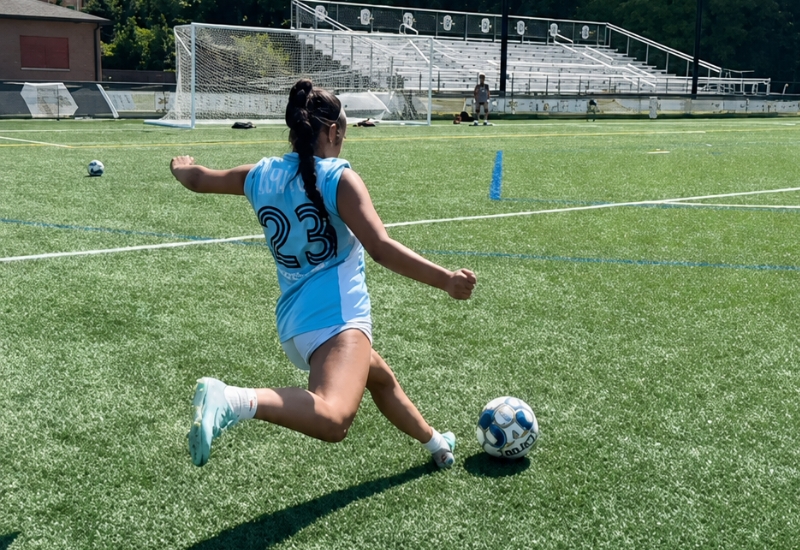
The kick in action

This is what your aiming for, and what the process looks like.

Here are some videos of people practicing and getting the kick.
Who I'd like to help

Anyone who would like to learn the kick within our community.

You don't need a coach, a club, a full pitch or a training group to start. A ball, a wall and twenty minutes is enough, and every part of the course is written for someone working on it alone
1

Youth players

From about eleven up. If you can strike a ball with the inside of your foot, you can start today.
2

Teammates

Take it to training and learn it together. It is a lot more fun with someone in the wall.
3

Coaches

Please use the diagrams and the drill with your own group. No credit needed, no permission needed.
4

Parents

You don't need to have played a minute. It's written so the two of you can work through it together.
THE MESSI KICK PRESENTED

Does your team need a session on this?

I'll come and present it in person, then take everyone outside to a wall and work through it until the ball starts turning. Around an hour, and it works just as well for a squad, a coaching staff or a classroom.

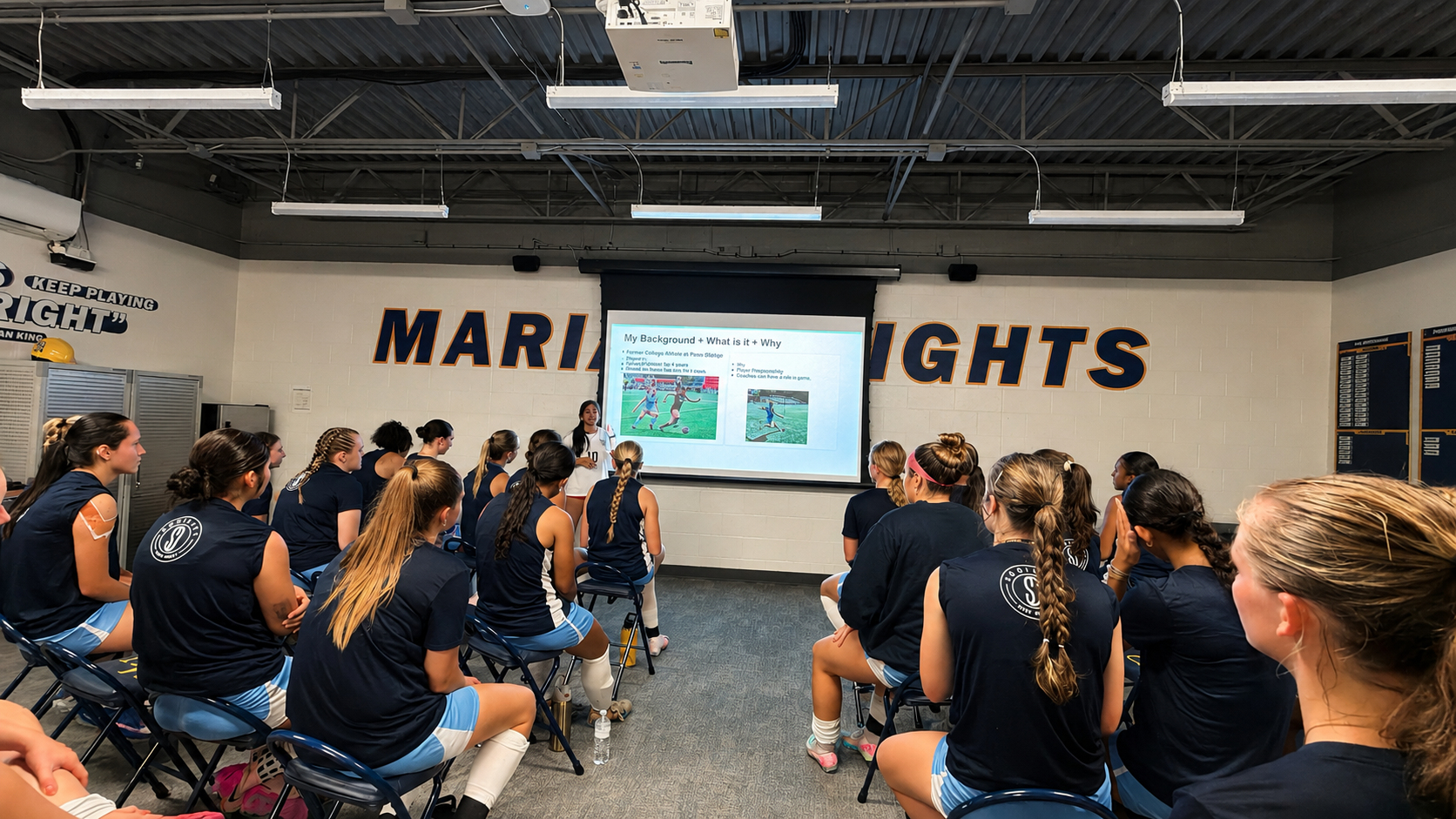
It started with one talk to my own team. I put the physics on a screen, went through the spin axis and the pressure differential, and then we went outside and hit balls until people started getting it. That session is what turned something I could do into something I could teach.

WHO I PRESENT TO

Club teams and academies
Indiana Soccer Teams
College programmes, including Purdue
Coaching staff and pro setups
REQUEST A SESSION
8 parts · about 3 weeks · free

Grab a ball, and let's get started

Part one takes about four minutes to read, and you can be out practising tonight. I'd love to hear how you get on.
START THE COURSE

Drive. Passion. Consistency.

A free coaching project teaching the science behind the curved free kick.
Copyright © 2026 All Rights Reserved
envelopelink